
AV-arkki will present a special screening at the 44th Festival Tous Courts, taking place from 1–4 December, 2026 in Aix-en-Provence, France.
Spanning nearly five decades, the special screening presented by AV-arkki takes the audience on a weird little journey through the archive of Finnish media art and experimental film.
Opening with Pasi “Sleeping” Myllymäki’s UFO in the Water (1979), the programme plunges into the weird and the unfamiliar, moving from the otherworldly towards the earthly and intimate. Through mysterious encounters, subconscious landscapes, speculative futures, and bodily meditations, the screening invites audiences to embrace the strange and explore the boundaries between the familiar and the unknown.
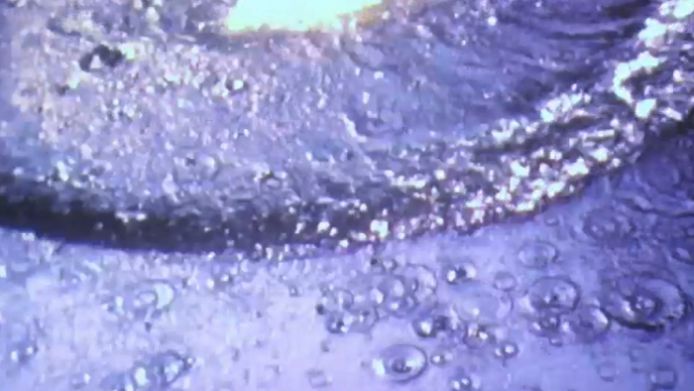
Pasi Sleeping Myllymäki: UFO in the Water (1979, 02:47)
A mystery in 8mm, shot in reverse and upside down. A weird object disturbs the quiet of the lake.
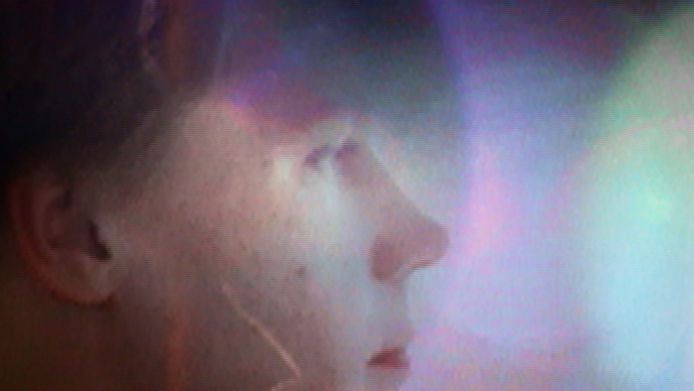
Marikki Hakola: Stilleben – Milena’s Journey (1989, 05:22)
This video work is based on letters written by Franz Kafka to his beloved Milena. The central themes of the piece are distance, longing and memories. The layered imagery relies on the collective memories of the viewer. The starting point for this is master composer Kaija Saariaho’s radiophonic work Stilleben.
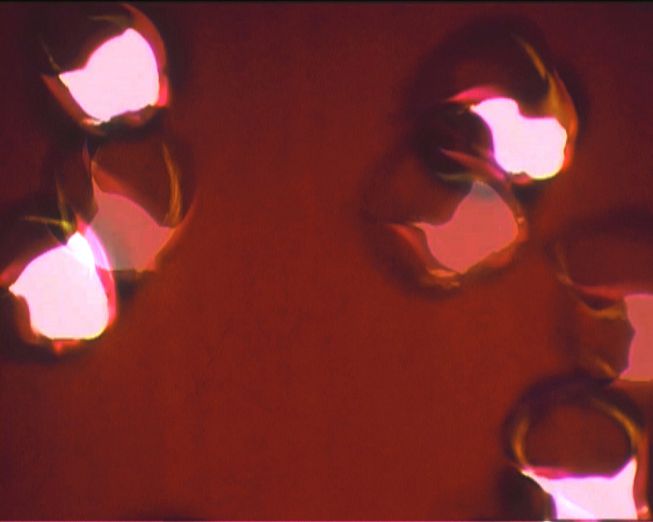
Milja Viita: A Tale of a Dead Man (2006, 04:55)
This video is a kind of video letter to NASA. A female voice is telling about the dream she had: There was a grey stone in her hands from which she accidentally created the planet Earth. She had to face difficult moral issues after discovering that there is life on the surface of the stone.

Juha Mäki-Jussila: Well (2012, 04:26)
Well is an experimental animation, a bubbling plunge into the deep waters of subconscious, from where forgotten memories rise to the surface and into the consciousness.

Niina Suominen: I Call Myself Sane (2010, 04:20)
The experimental work created by manipulating film material combines poetry, music, and image.

Anni Puolakka: Diamond Belly (2018, 11:15)
Diamond Belly explores love and companionship between a human artist, the bot and mosquitoes. The human offers their body as a nourishing ‘baguette’ to the diamond-bellied mosquitoes, envisioning the flies’ bio-chemistry in complementary with their own haematic cycle.
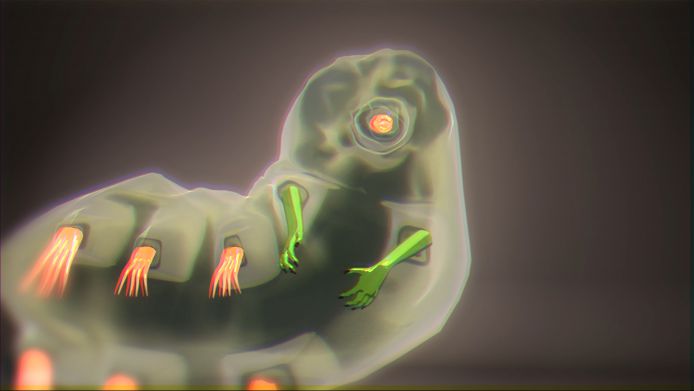
Joonas Hyvönen: Bog Body (2019, 16:41)
In an animated short film Bog Body, a human cadaver moves layer by layer deeper into a swamp somehow retaining sentience. Descending, she gets evermore entangled in a hive mind of everything the bog has preserved in itself through time. She, however, gets resurrected into a future society, just as the bog bodies of our times have been raised from the swamps.

Nastja Säde Rönkkö: salt in our blood, in our sweat, in our tears (2024, 13:59)
salt in our blood, in our sweat, in our tears takes its starting point from a commonly held – yet incorrect – belief that blood contains the same amount of salt as sea water. Three narrators – a teardrop, a drop of Golden blood and a droplet of sweat – tell their own stories of love and loss. The video is driven by a poetic text: an intimate verse with an ambiguity that delivers a metanarrative for lost and found identity, a scarred planet and our ever-changing world.

Charlotte Clermont: du soleil, que ca existe (2025, 09:05)
“du soleil, que ça existe” examines the temporalities through which the body forms, stores, and creates what we translate as the real. Focusing on longing, distance, and language, this text-based project explores the expansiveness of both language and landscape, by installing spaciousness in the dialogue and by considering landscapes as bodies.
Because of veils that obscure or illuminate the images, the inability to perceive is experienced at times in almost-erased spaces, at others in velvety dark spaces, where only details are revealed through the flickering of the film’s solarization. The rhythm between light and darkness echoes the movements of the sea, adding aqueous and sensuous layers to the film, where images seem to exist outside of the often narrative space of cinema, becoming instead paintings or photographs in motion.
The overall feeling of this short film is inspired by Marguerite Duras’ The Malady of Death (trans. 1986) in which she describes, at the end of the book, how a window overlooking a dark sea at night becomes an element central to her work.
Festival Tous Courts
1–4 December, 2026
Aix-en-Provence, France
Read more: Festival Tous Courts